
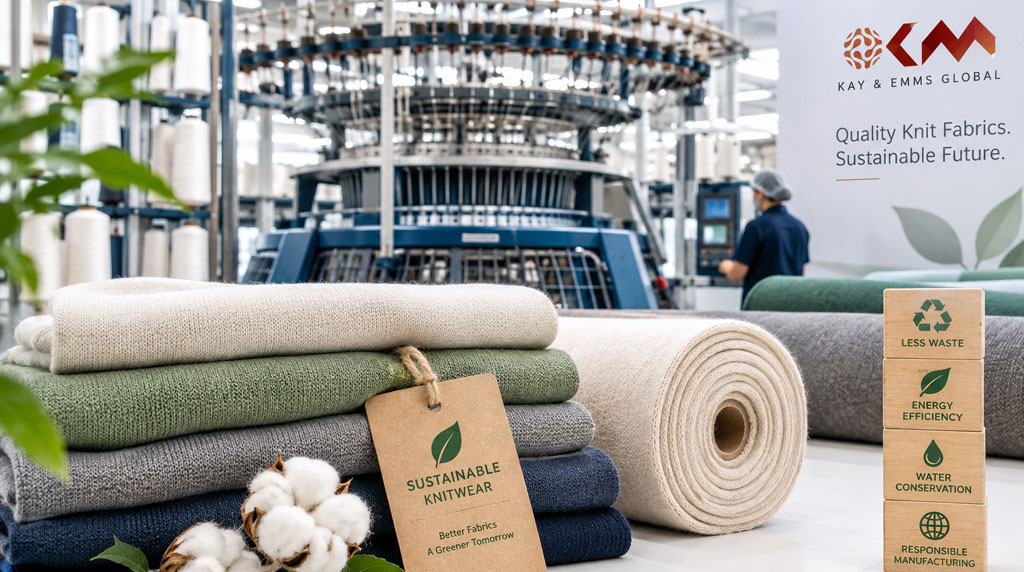
Sustainable Knitwear Manufacturing: Reducing Waste and Improving Fabric Efficiency
Sustainable knitwear manufacturing is becoming an important consideration for textile businesses and apparel brands. By paying attention to material selection, production planning, resource use, and product quality, manufacturers can identify practical opportunities to reduce avoidable waste and improve manufacturing efficiency.
At Kay & Emms Global, Best of the Knits focuses on knit fabric and apparel manufacturing solutions. Understanding the journey from yarn selection to finished garment helps businesses make informed decisions about fabric performance, quality requirements, and responsible production.
In this article, we explore practical approaches that can help textile manufacturers and apparel brands consider sustainability throughout the knitwear production process.
What Is Sustainable Knitwear Manufacturing?
Sustainable knitwear manufacturing considers how fabrics and garments are produced, including the materials used, the resources required, the waste generated, and the durability of the final product. It is not limited to choosing a particular fibre. It also involves reviewing processes and making improvements where they are practical and measurable.
Knitted fabrics are made by interlooping yarns to create structures with different levels of softness, stretch, breathability, weight, and stability. Yarn choice, knitting construction, dyeing, finishing, and garment assembly can all affect the final product and its production requirements.
1. Choosing the Right Materials
Material selection is an important first step in fabric development. Different fibres offer different properties, so the right option depends on the garment's intended use, required performance, target price, and customer specifications.
Common Material Considerations
- Cotton: Often selected for its familiar feel and versatility in T-shirts, sweatshirts, and everyday apparel.
- Organic Cotton: May support specific sourcing goals when the supply chain and relevant certification claims are verified.
- Recycled Fibres: Can make use of recovered materials, depending on fibre quality and the requirements of the finished product.
- Blended Yarns: Can combine properties such as comfort, strength, stretch, or recovery to meet a garment's needs.
- Cellulosic Fibres: Options such as lyocell or modal may suit selected applications depending on sourcing and processing.
No single fibre is best for every product. Brands and manufacturers should consider durability, care requirements, material traceability, and the complete manufacturing process before selecting a fabric.
2. Reducing Fabric Waste During Production
Fabric waste can occur during knitting, inspection, cutting, sampling, and garment assembly. Identifying where waste is generated helps production teams prioritise improvements and avoid unnecessary material losses.
Improve Cutting and Marker Planning
Accurate patterns and efficient marker layouts can help make better use of fabric during garment cutting. Reviewing layouts before bulk production may reduce offcuts while maintaining the required garment measurements and quality standards.
Identify Defects Early
Inspecting fabric before cutting can help identify holes, stains, knitting faults, or uneven dyeing. Finding issues early gives the production team an opportunity to assess the material and reduce the risk of defective pieces moving to later stages.
Manage Leftover Materials Responsibly
Depending on their condition and composition, leftover materials may be suitable for sampling, recovery, recycling, or other appropriate uses. Separating waste by material type and keeping clear records can help businesses assess recovery options.
3. Improving Water and Energy Efficiency
Dyeing, washing, and finishing requirements vary by fibre, colour, construction, machinery, and treatment. Reviewing resource consumption at these stages can help manufacturers understand where improvements may be possible.
- Monitor water and energy use at relevant production stages.
- Maintain equipment to support consistent and efficient operation.
- Plan production carefully to reduce avoidable repeat processing.
- Evaluate suitable lower-resource processes where product quality and technical requirements allow.
- Manage wastewater appropriately and assess reuse only where it is technically suitable and compliant with applicable requirements.
Any improvement should be assessed using actual production data. Measuring resource use before and after a process change gives businesses a clearer understanding of whether the change is effective.
4. Maintaining Fabric Quality and Durability
Product durability is an important part of responsible manufacturing. Fabrics and garments that retain their required appearance, fit, and performance through appropriate use and care may not need replacement as frequently.
Depending on the product and buyer requirements, quality checks may include:
- GSM: Confirming fabric weight against the approved specification.
- Dimensional Stability: Checking shrinkage and measurement changes after the relevant care process.
- Colour Consistency: Comparing production batches with approved colour standards.
- Surface Inspection: Checking for holes, stains, knitting faults, and uneven surfaces.
- Performance Testing: Assessing stretch, recovery, pilling, strength, or other properties required for the garment.
Clear specifications and appropriate testing help manufacturers and apparel brands assess whether a fabric is suitable for its intended use. Testing requirements should be agreed before production begins.
5. Using Technology to Improve Production Efficiency
Digital production records and monitoring tools can help teams identify recurring defects, delays, material losses, and process bottlenecks. Their value depends on collecting useful data and using it consistently to support decisions.
Production Monitoring
Reviewing production information can help teams understand where delays or avoidable waste occur and identify opportunities to improve planning.
Digital Quality Records
Recording inspection results, fabric specifications, test outcomes, and sample approvals helps teams maintain consistent requirements across production batches.
Material Traceability
Supplier documents and material records can help businesses understand the origin of inputs and the stages they pass through. Any environmental or sourcing claims should be supported by appropriate documentation.
6. Building a More Responsible Supply Chain
Textile production involves multiple partners, including fibre suppliers, yarn producers, knitting facilities, dyeing and finishing operations, garment manufacturers, and logistics providers. Collaboration across these stages can help improve communication and clarify expectations.
Apparel brands can support better coordination by sharing accurate specifications, agreeing on quality requirements, reviewing supplier documentation, and setting realistic improvement targets. Regular communication can also help address recurring issues before they affect larger production runs.
Responsible sourcing is an ongoing process. Businesses should verify applicable certifications and supplier claims rather than relying on unverified environmental statements.
7. Practical Steps for Apparel Brands
Brands that want to improve their knitwear production can start with a clear and measurable plan.
- Define Product Requirements: Confirm fibre composition, GSM, colour, fit, and performance needs.
- Review Material Sourcing: Assess supplier documentation and traceability requirements.
- Measure Waste: Record material losses, rejected fabric, and rework to identify priority areas.
- Agree on Quality Standards: Confirm inspection procedures and relevant tests before bulk production.
- Review Resource Use: Use available water, energy, and production data to identify possible improvements.
- Track Progress: Review measurable indicators regularly and document the results.
Starting with a few clear priorities can make improvement more manageable and help teams assess the results over time.
How Kay & Emms Global Supports Knit Fabric and Apparel Needs
Kay & Emms Global's Best of the Knits website presents knit fabric and apparel manufacturing solutions for businesses with different product requirements. Fabric selection and production planning should take into account the intended garment, quality expectations, and relevant manufacturing specifications.
For apparel brands, clear communication about fabric construction, material composition, target weight, colour, and performance can help align product development with manufacturing requirements.
Explore the company's textile manufacturing services to learn more about its fabric and apparel capabilities.
Conclusion
Sustainable knitwear manufacturing involves more than selecting a particular fibre. Material planning, waste reduction, resource management, quality control, product durability, and supply-chain documentation all contribute to a more considered production approach.
By setting clear specifications, measuring production performance, and working closely with manufacturing partners, apparel brands can identify practical opportunities to improve efficiency while maintaining the quality required for their products.
Frequently Asked Questions
1. What Is Sustainable Knitwear Manufacturing?
It is an approach to producing knitted fabrics and garments that considers material sourcing, waste, water and energy use, durability, and responsible production practices.
2. How Can Textile Manufacturers Reduce Fabric Waste?
They can review cutting layouts, inspect fabric early, improve production planning, record material losses, and assess suitable recovery or recycling options for leftover materials.
3. Are Recycled Fibres Suitable for All Knit Fabrics?
Not always. Suitability depends on fibre quality, composition, fabric construction, performance requirements, and the intended garment. Material claims should be verified with appropriate supplier documentation.
4. Why Is Quality Control Important for Sustainable Production?
Appropriate quality checks can help identify defects, reduce rework, and ensure that materials meet the requirements of their intended application.
5. How Can Apparel Brands Assess a Manufacturer's Capabilities?
Brands can review manufacturing capabilities, sample approval processes, quality-control procedures, relevant testing, supplier documentation, and communication before placing production orders.
Looking for Knit Fabric and Apparel Solutions?
Discuss your fabric requirements, product specifications, and manufacturing needs with Kay & Emms Global.
Contact Our Team