
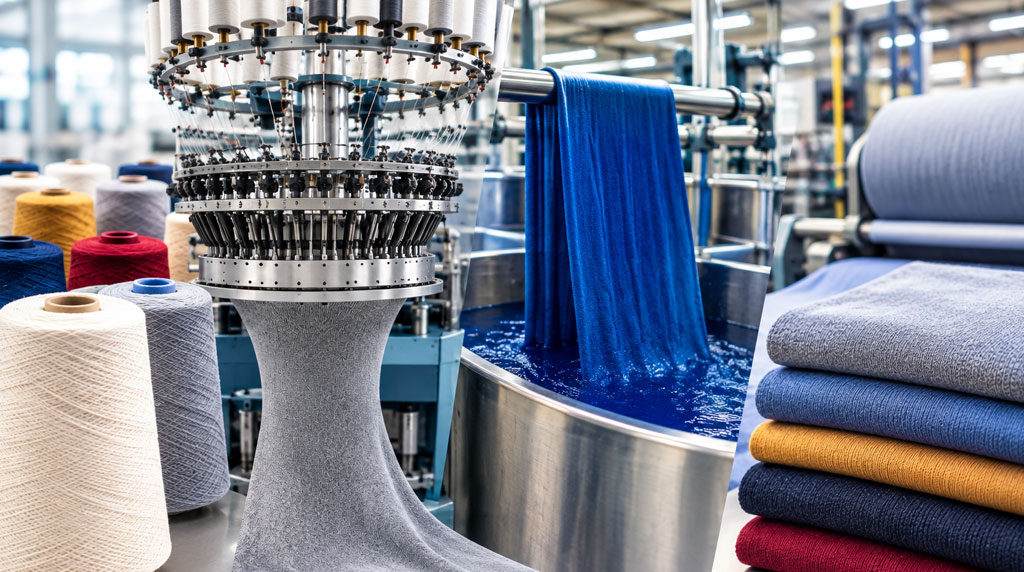
The Knit Fabric Manufacturing Process: From Yarn to Fabric
Knit fabric manufacturing transforms yarn into soft, flexible, and versatile fabric used in modern apparel. From everyday T-shirts to sportswear and comfortable casual clothing, every production stage contributes to the fabric's quality, appearance, and performance.
Understanding the process from yarn selection to final inspection helps clothing brands and buyers make informed decisions about fabric construction, durability, comfort, and finishing.
1. Yarn Selection and Preparation
The manufacturing process begins with selecting suitable yarn. The choice depends on the intended garment, desired softness, strength, stretch, weight, and final application.
Common yarn options include:
- Cotton yarn: Popular for softness and everyday comfort.
- Polyester yarn: Used for durability and performance applications.
- Viscose yarn: Often selected for its soft feel and drape.
- Blended yarns: Combine selected properties of different fibers.
Before knitting begins, yarn is checked for suitability and consistency to help support reliable production.
2. The Knitting Process
During knitting, machines form interconnected loops of yarn to create fabric. Machine settings, yarn type, and construction influence the fabric's texture, stretch, weight, and appearance.
Common knitted fabric structures include:
- Jersey: Commonly used for T-shirts and casualwear.
- Rib: Suitable for cuffs, collars, and fitted garments.
- Interlock: Often selected for smooth and stable apparel.
- Pique: Frequently used for polo shirts and textured garments.
Choosing the appropriate construction helps ensure the fabric meets the requirements of the finished garment.
3. Fabric Inspection After Knitting
After knitting, fabric is inspected for visible defects and construction issues. Early inspection helps identify problems before the material proceeds to further processing.
- Holes, dropped stitches, and knitting defects
- Fabric width and weight consistency
- Uneven texture or yarn-related issues
- Oil marks and other surface imperfections
4. Dyeing and Fabric Finishing
Depending on the product requirements, knitted fabric may undergo dyeing and finishing to achieve the desired color, softness, appearance, and dimensional stability.
Common finishing operations include:
- Dyeing: Produces the required fabric shade.
- Washing: Helps remove processing residues.
- Softening: Adjusts the fabric's hand feel.
- Compacting: Helps control dimensional changes and shrinkage.
- Heat setting: Used where appropriate for the fiber and construction.
The exact treatments depend on yarn composition, fabric structure, customer specifications, and intended use.
5. Final Quality Control
Quality control helps confirm that finished fabric meets the agreed specifications before it is approved for garment production. Inspection requirements vary according to the fabric and its use.
- Fabric weight and width
- Color consistency and overall appearance
- Dimensional stability and shrinkage
- Visible defects and surface quality
- Hand feel and suitability for the intended application
Consistent quality checks can help reduce avoidable fabric waste, improve production reliability, and support better garment quality.
Why Is Each Manufacturing Stage Important?
Every stage contributes to the final fabric. Suitable yarn selection supports the desired feel and strength, correct knitting settings create the required structure, and appropriate finishing improves appearance and usability.
Coordinating these stages helps manufacturers produce knitted fabrics for different apparel applications, from lightweight everyday clothing to more specialized garments.
Fabric selection tip: Always consider fabric composition, weight, stretch, finishing, and end use before choosing material for a garment.
Conclusion
The knit fabric manufacturing process involves yarn selection, knitting, inspection, dyeing, finishing, and final quality checks. Each stage contributes to the fabric's comfort, appearance, durability, and performance. Understanding these steps helps businesses make informed fabric choices for their apparel products.
Frequently Asked Questions
1. What is the first step in knit fabric manufacturing?
The process typically begins with selecting and preparing yarn suitable for the required fabric construction and application.
2. How is knitted fabric produced?
Knitted fabric is produced by forming interconnected loops of yarn using knitting machines.
3. Why is fabric finishing important?
Finishing can improve fabric appearance, softness, color, and dimensional stability, depending on the treatment used.
4. What is checked during fabric quality control?
Common checks include fabric weight, width, color consistency, visible defects, and dimensional stability.
5. Which knit fabrics are commonly used for clothing?
Jersey, rib, interlock, and pique are common structures. The best choice depends on the garment's design and requirements.
Explore Knit Fabric Solutions
Looking for knit fabric solutions for your next collection? Contact Best of the Knits to discuss your fabric requirements and explore suitable options for your apparel needs.
Contact Us